02 · SEO Case Study

Ranking is a system, not a headline.

Local SEO, on-page, technical, and content-for-search — built as an integrated discipline across service-vertical operators where "found on Google" is the whole business model.

Focus
Verticals
Stack
Local + Technical + On-Page + AEO
Home Services
GSC · Schema · GBP
The Discipline

SEO is a critical cog in the visibility of local brands.

For service businesses, organic search is often the difference between growth and stall. I treat SEO as infrastructure — not something bolted on after launch, but built into the brand from the first sitemap forward.

The Approach

Five pillars, one integrated system.

SEO breaks when any one layer is missing. I run all five together.

Technical SEO

Crawlability, Core Web Vitals, site speed, canonical structure, indexation hygiene. If Google can't read the site cleanly, nothing else matters. Every site I ship passes a technical audit before it goes live.

Local SEO

Google Business Profile optimization, review generation systems, local citations, service-area schema. For a service business, local is the whole game. I build it in from day one.

On-Page + Structured Data

Keyword-mapped architecture, schema (LocalBusiness, FAQ, Service, Review), meta hygiene, internal linking. Structured data is how machines understand the brand, so I ship it by default.

Content-for-Search

Content mapped to search intent — blog, service pages, location pages — written to answer the actual questions people are searching, in the brand's voice. Not stuffed. Human-first, machine-legible.

AEO + Authority Signals

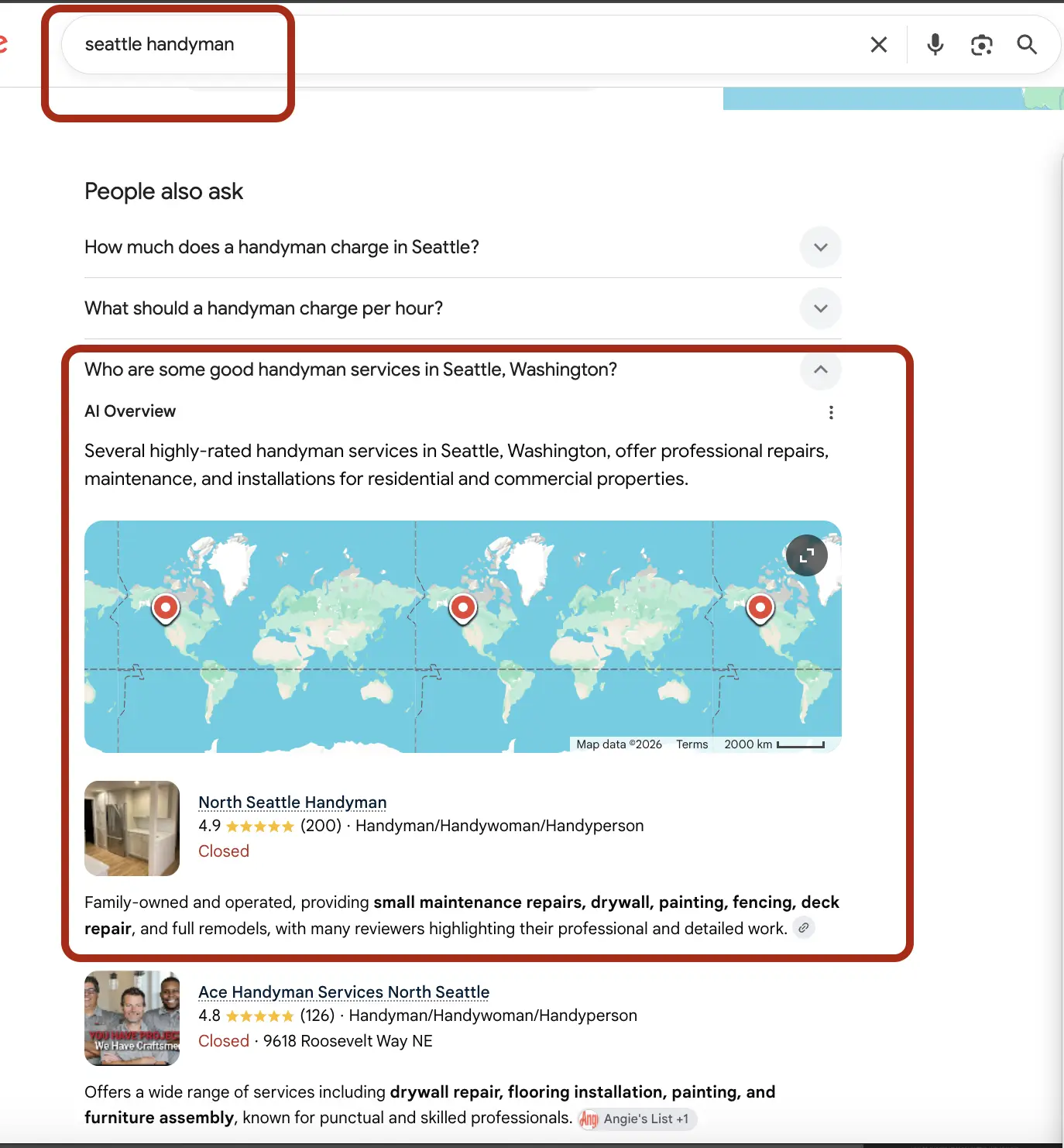
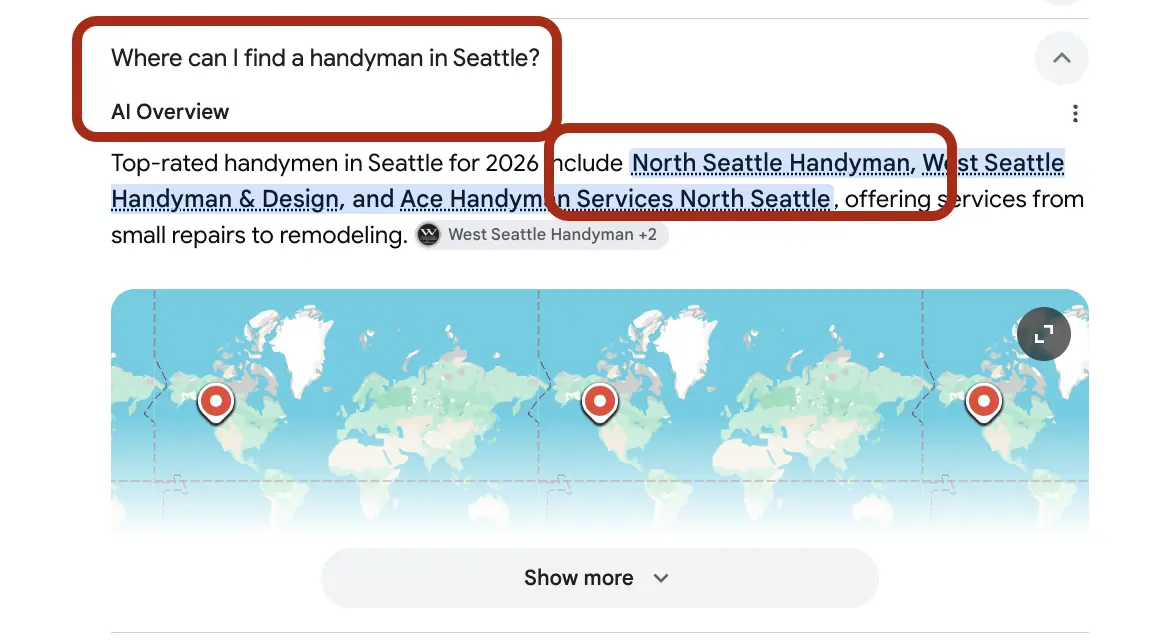
Answer Engine Optimization, PR mentions, media features, local citations, and trusted directory listings. Getting the brand cited in the right places is what earns organic rank AND AI-search visibility in 2026.

Featured Work

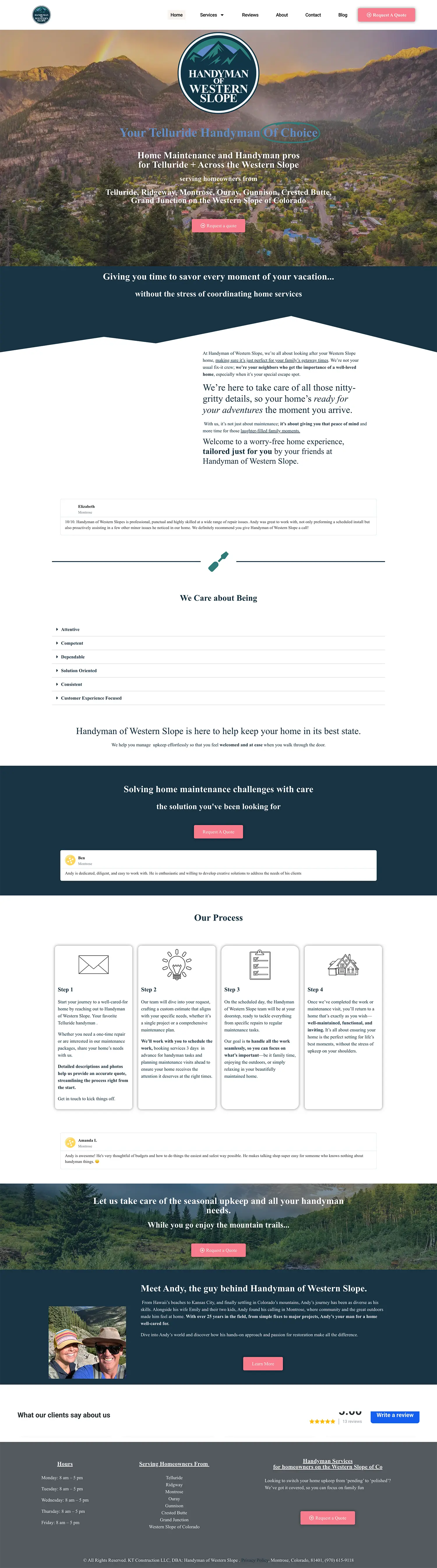
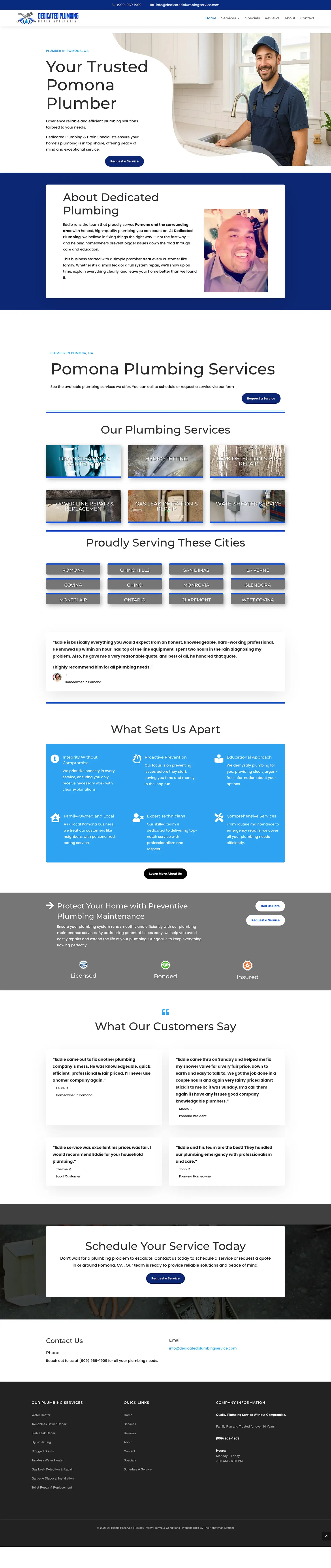
Multi-client SEO ownership across service verticals.

Featured client work from active engagements. Full case detail available on request.

#1
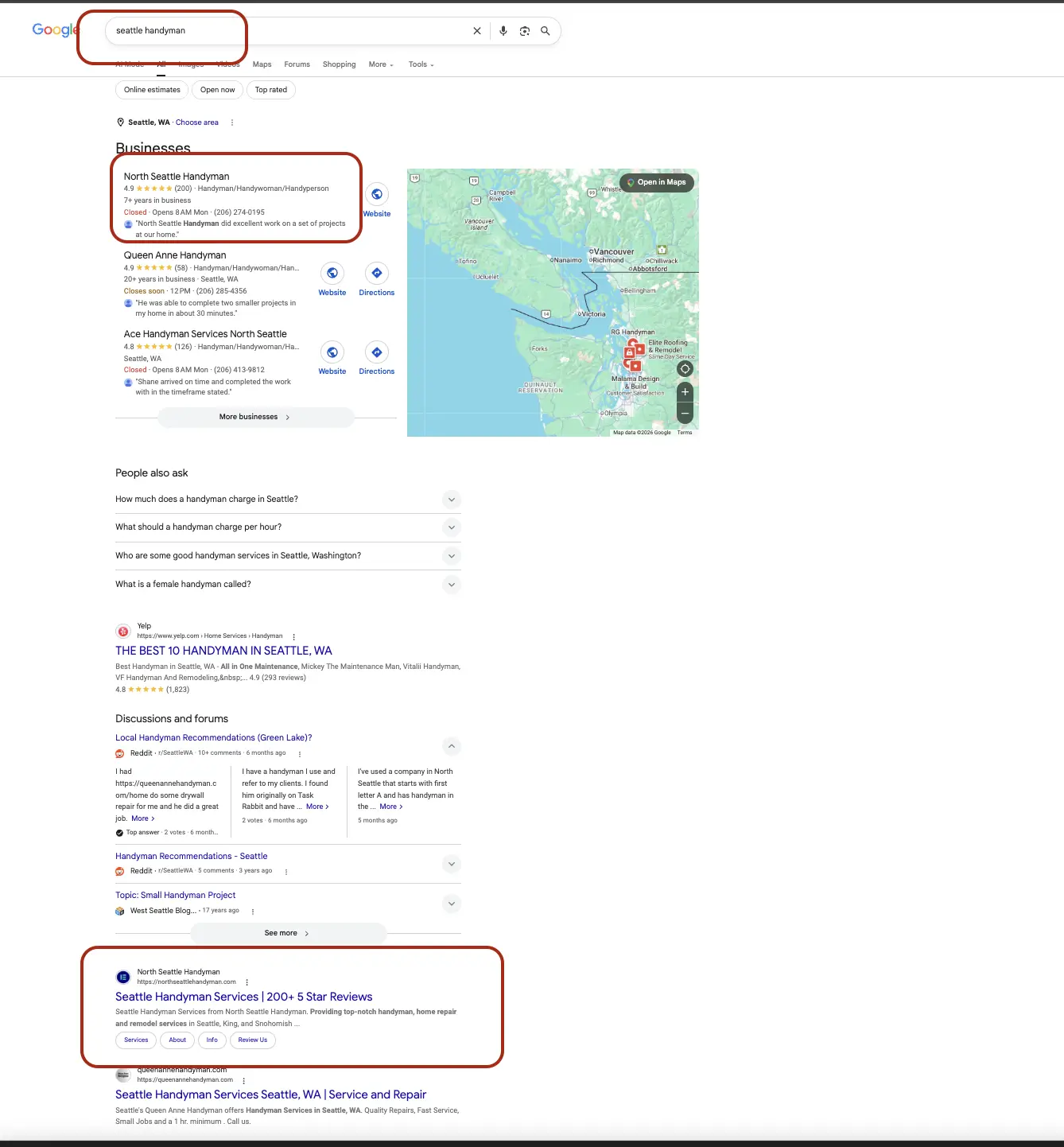
Organic for "handyman seattle" & "seattle handyman"
40+
Organic leads per month (plus ~20 from ads)
200+
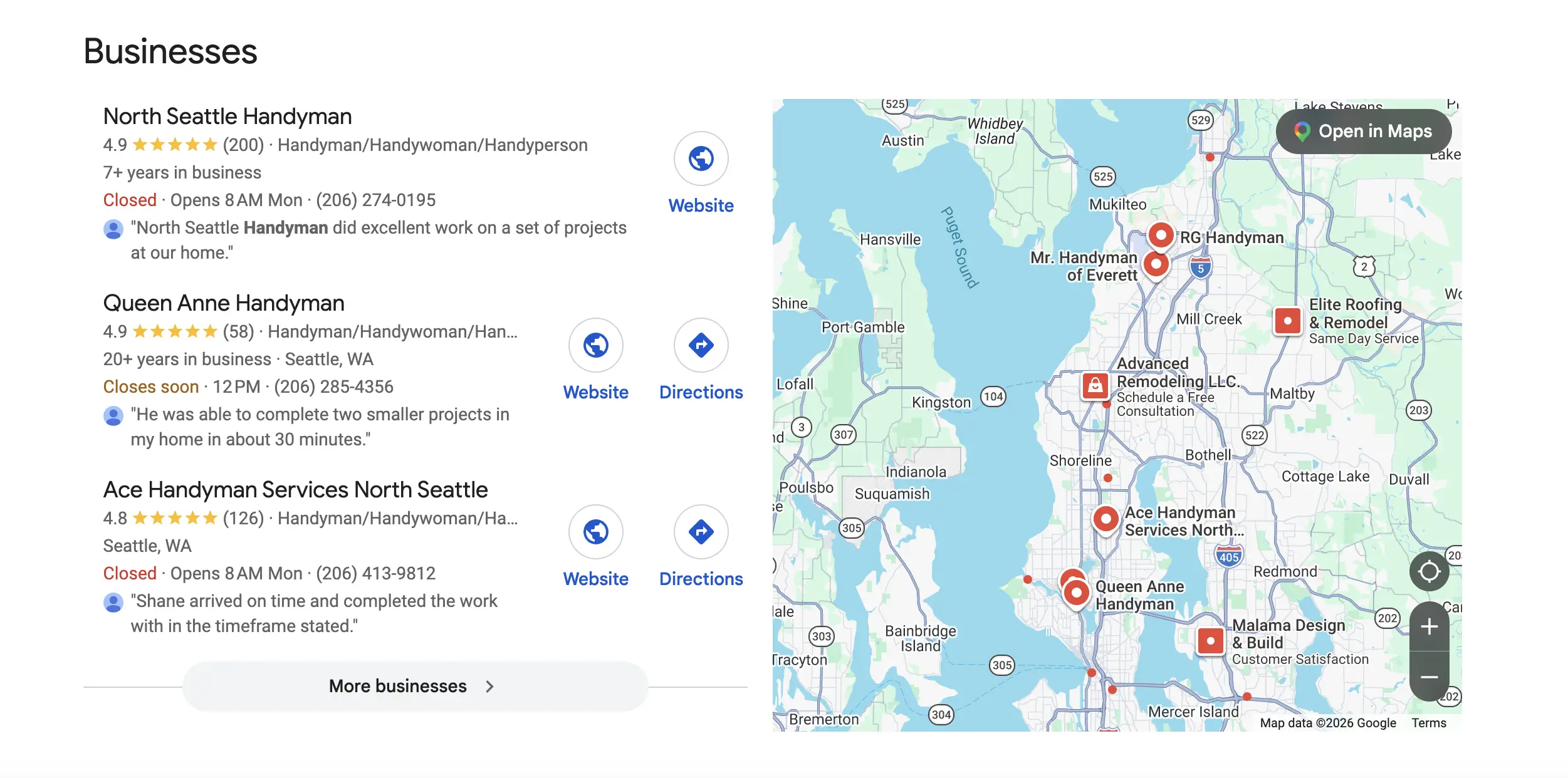
5-star Google reviews — dominating local pack
Top 5
Brand name itself now a searched handyman-Seattle term
How SEO Fits

Ongoing SEO, for a select few.

Most clients come to us to build the brand — not to run ongoing SEO. Every brand we ship has SEO baked in from day one: keyword-mapped architecture, schema, local SEO, and content structured to earn Google's attention. For handyman operators in less-competitive markets, that's often enough to land on page one without ongoing management. For a few clients — NSHM (featured above) and Airpros currently — we run the full ongoing discipline: site cleanup, keyword optimization, consistent content, and PR mentions to earn top local rankings.

The Method

How I approach SEO.

Foundation before feature.

A perfect blog post on a broken site doesn't rank. Technical foundation, schema, and site architecture come first. Content strategy stands on top of infrastructure — never the other way around.

Local is the whole game.

For service verticals, 80% of the wins live in local SEO — GBP optimization, review systems, service-area schema, local citations. I build local SEO into the brand at launch, not after the client asks why they aren't ranking.

Schema by default.

Structured data isn't optional in 2026 — it's how AI search, featured snippets, and rich results happen. Every site I ship has LocalBusiness, Service, FAQ, and Review schema wired in from day one.

For both readers.

I write for both — the person searching AND the algorithm scoring. Most small businesses don't give Google enough context to pay attention, so you need enough words, pages, and context for Google to confidently show the business to the customer. And you need simple language with easy next-step CTAs so the human searching can move quickly from "can you help me?" to "I'm ready to hire you."

Ship, measure, refine.

SEO is iterative, not a one-time deliverable. I set up GSC + tracking on day one, then use the data to inform which content, which keywords, and which technical fixes actually move the needle — not what a checklist says should matter.