Paid ads work when the whole system is ready for them — site, offer, landing page, and brand doing their job before a dollar goes to the ad account. My focus is the strategy and the small tweaks that elevate conversion and build trust in the brand.
When a small local service business is ready to add advertising to their stack, we start at the website. There's no point running ads to a site no one engages with — so before a dollar goes to the ad account, we make sure the site is actually converting.
The best ad angle usually comes from what terms have the highest search volume in the market. Since most small businesses aren't running ads for a specific launch or offer, we make sure the landing page and the ad both speak to the customer's exact need — so the click actually leads to an inquiry.
Google Ads runs on intent — someone is actively searching for the service. That's where the highest-quality inquiries come from for local service businesses. Local Services Ads (LSAs), Search, and PMAX, with the campaign type matched to the market and budget.
Facebook ads are built as short video ads meant for views and repeated exposure. When the customer is finally in need of the service, the brand comes to mind — they search Google, and the ad shows up too. Facebook is for the brand recall. Google is for the conversion.
A great ad with a broken landing page is just spend. The ad copy, the landing page headline, and the next-step CTA all need to speak to the same customer need — or the click never becomes a conversion.
Two examples from my own brands where I owned the full ad stack — strategy, copy, targeting, landing pages, and creative.
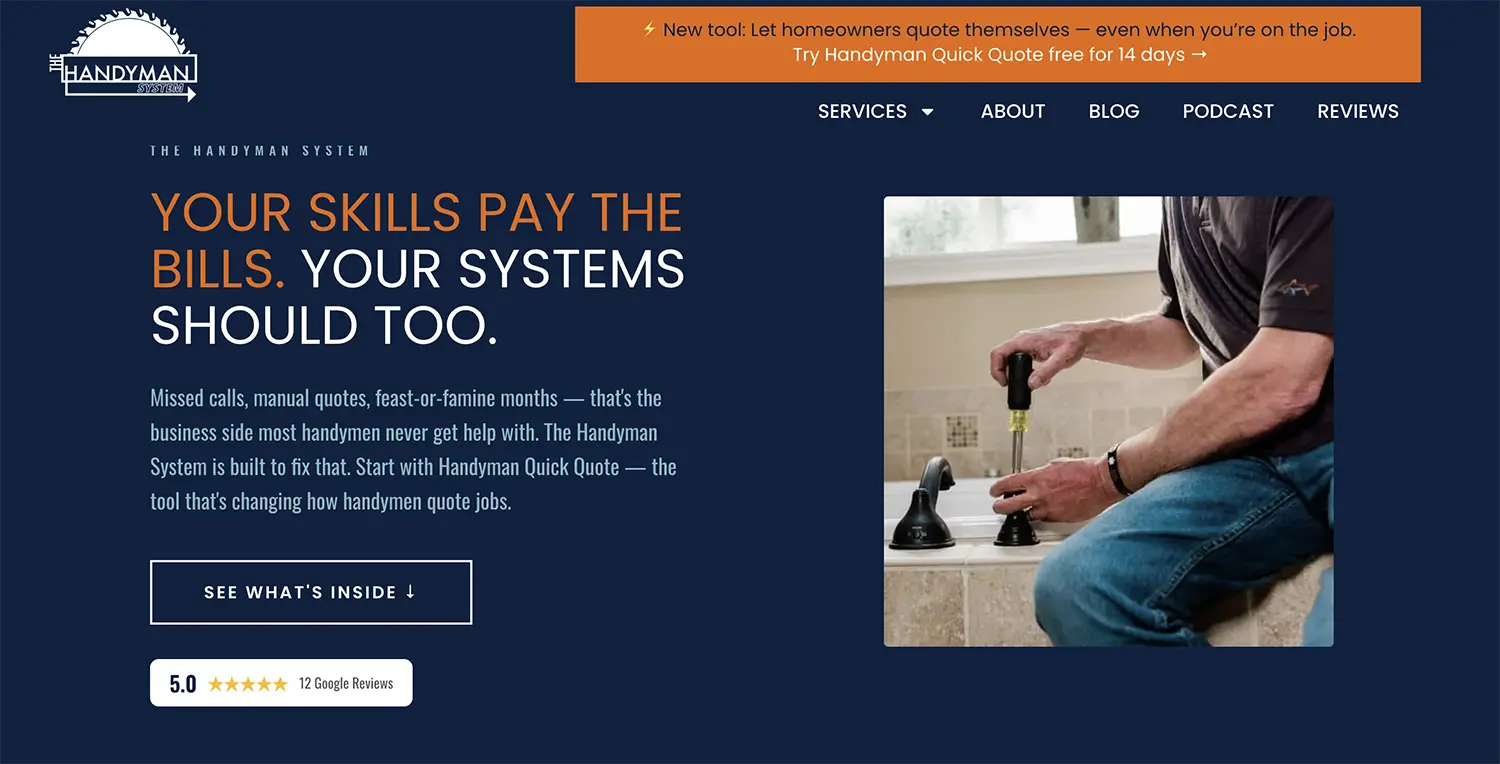
For The Handyman System — my productized brand and business system for handymen — we've focused on Facebook ads that speak directly to the handyman's visibility issues. The ad names the exact problem they feel every day: their business isn't getting found, and they don't know why.
Facebook is the right platform because the handyman audience doesn't search for "productized brand system." They discover it. So we meet them where they scroll, name the problem in their language, and route them to the offer.
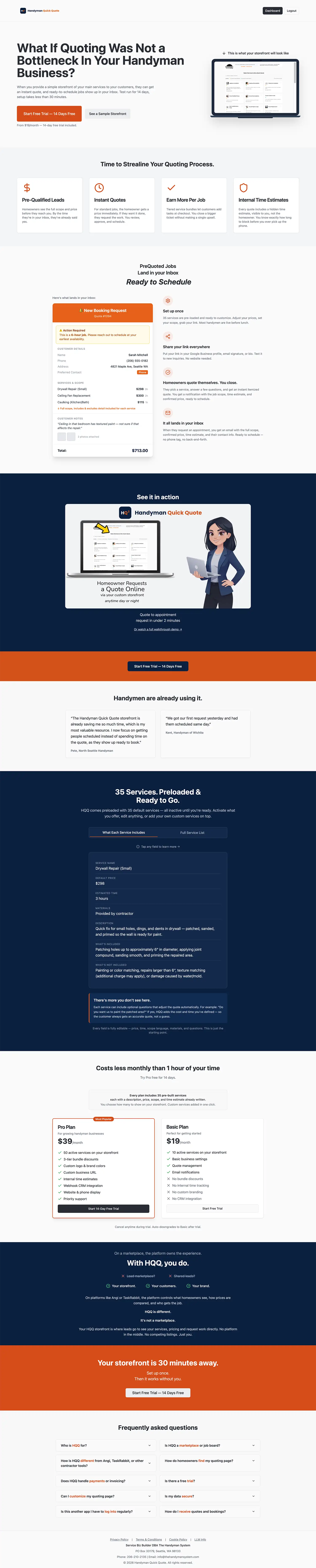
For Handyman Quick Quote — the SaaS quoting product — we ran ads that named the exact pain: the handyman is the bottleneck in their own quoting process. They lose leads because quotes take too long. HQQ removes that bottleneck.
Average cost per trial signup runs $32 for a $39/month product — meaning every ad-driven signup pays for itself inside the first billing cycle.
Two active client ad engagements, each with a distinct platform-and-budget play matched to the business.
Facebook for visibility: $5/day always-on brand recall.
Google Ads for leads: seasonal, $600–$2,000/month, averaging $35 per conversion. Facebook keeps NSHM in mind. Google catches them when the need shows up.
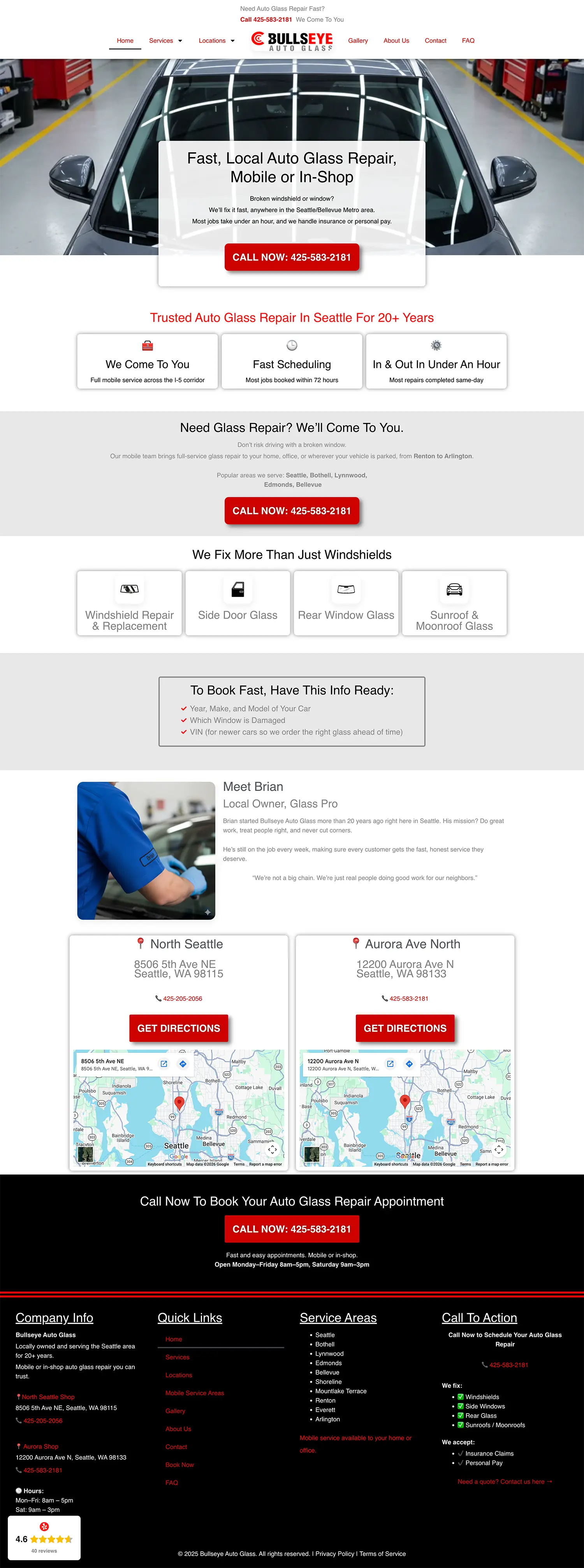
Google phone call ads: $3,000/month, averaging $22 per phone call conversion. High-intent inbound leads calling directly from the ad. Low-friction, high-conversion.
View site →My focus is on the strategy and the small tweaks that elevate conversion and build trust in the brand. A great ad campaign on a broken site is just spend. A working site with a clear offer — that's where the ad dollars start actually working.