03 · Content Strategy Case Study

Multi-brand editorial with a POV that carries.

Content strategy, writing, and daily operations across multiple brands — with distinct voice per brand and a system that ships weekly, not sporadically.

Brands In Production
Surfaces
Cadence
Vertical Range
3 owned + client roster
Blog · Email · Social · GBP
Daily / Weekly
B2B SaaS, Services, Coaching
The Discipline

Content isn't posts. It's the brand talking every day.

Content strategy is the operating system for how a brand shows up in the world. Blog, email, social, GBP posts, campaign work — all of it has to speak the same brand, at consistent cadence, without the founder in the room. That's the discipline I've built and the system I run.

The Surfaces

Four channels. One editorial voice.

Every brand I run has to speak consistently across all four. The system makes that possible.

Blog + SEO Content

Long-form content mapped to search intent — service pages, blog posts, resource libraries. Written in brand voice, structured for search, published on a real cadence. Not content-farm output; not blog-when-inspired. Editorial calendars with actual shipping rhythm.

Email Marketing

Sequences, campaigns, broadcast newsletters, launch emails, nurture flows. Segmented by customer stage and behavior. Copy and subject-line testing built in. The email list is treated as an owned asset — never rented, never abused.

Social + Short-Form

Platform-native content built for how each channel actually consumes attention — not cross-posted from one to five. Reels, LinkedIn posts, Instagram, TikTok — tailored per platform, repurposed strategically from long-form when the story warrants it.

Campaign Strategy

Launch calendars, offer campaigns, seasonal pushes, PR moments. Every campaign has a defined audience, a defined action, and a defined success measure — before the first asset gets written. Multi-channel integration by design, not by accident.

Featured Engagement

The multi-brand content engine.

I run content operations across three owned brands and multiple client engagements simultaneously — each with a distinct voice, audience, and editorial calendar.
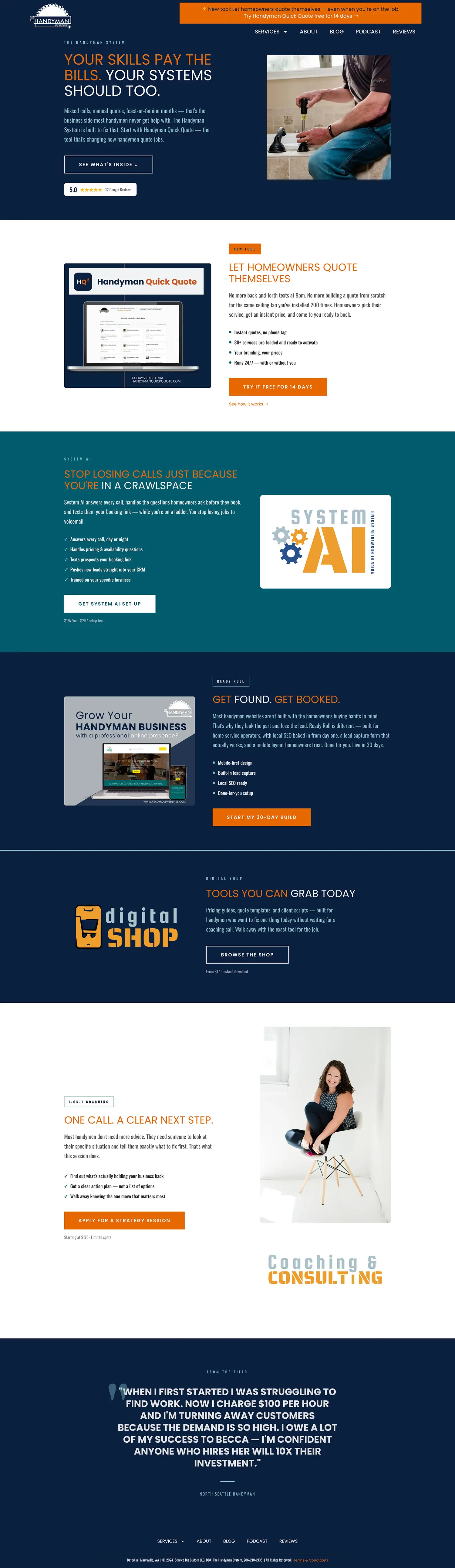
Plus daily-content and campaign work across the client roster (see home page). All simultaneously, all with distinct voice, all on a real cadence.

Voice-First Systems

The voice comes first. Then the content sounds like the brand.

Most brand content in 2026 sounds AI-written — because it was, and no one taught the AI how the brand actually sounds. Every brand I run has its own documented voice: how it talks, what it says, the phrases it refuses. Give the machine something specific to work from, and content ships at real volume without every brand ending up sounding the same.

The Method

How I run content.

Voice before volume.

Every brand gets a documented voice profile before the first post ships. Volume without voice is noise — and worse, it's AI-generic slop that reads as untrustworthy in 2026. Voice discipline is what makes scale possible without dilution.

Cadence over occasion.

Consistency beats inspiration. I run editorial calendars, not moods — weekly blogs, weekly newsletters, daily social, monthly campaigns. The audience learns when to expect the brand, and the algorithm learns to trust the cadence.

Platform-native, not cross-posted.

A LinkedIn post is not an Instagram caption. TikTok is not YouTube Shorts. Each surface has its own attention economy, and content has to be built for how the surface actually rewards attention — not lazily replicated across five.

Repurpose with intent.

One long-form asset can seed a week of derivative content — but only if the derivatives are re-authored for each platform, not chopped-and-reposted. Repurposing is a strategy, not a shortcut.

Measure the right thing.

Engagement metrics are cheap. What matters is whether content moves people toward the business outcome — email sign-ups, product signups, sales conversations. I optimize for the metric one step upstream of revenue, not vanity numbers.