Twelve brands built end-to-end.
Voice, visual identity, site, and go-to-market — owned from blank page to live business.
North Seattle Handyman
Full-stack brand and business build from scratch in 2017 — the business didn't exist. We chose the name and URL for search popularity, then built the voice, visual identity, site, booking flow, and content engine. Positioned in a category where every competitor looked the same, as trusted local service — not gig-economy handyman.
The result: $0 to $250K/year as a solo operator on brand + local SEO alone. When they were ready to scale, we built team systems, expanded SEO, and added paid — $250K to $1.8M in 18 months.
The founding story behind THS + HQQ: when NSHM was featured in a viral video, my inbox flooded with handymen asking how. That inbound demand is why The Handyman System and Handyman Quick Quote exist — productized answers to a market I'd already proven.
- Brand voice & positioning
- Visual identity system
- Website + booking flow
- Local SEO + schema
- Email marketing
- Google Ads + LSA
- Review management
- Content operations

My brands
Three brands I own and operate.
Rebecca Ellison Creative
Messaging strategy for coaches + consultants. Voice, brand system, site, offer design.
View site →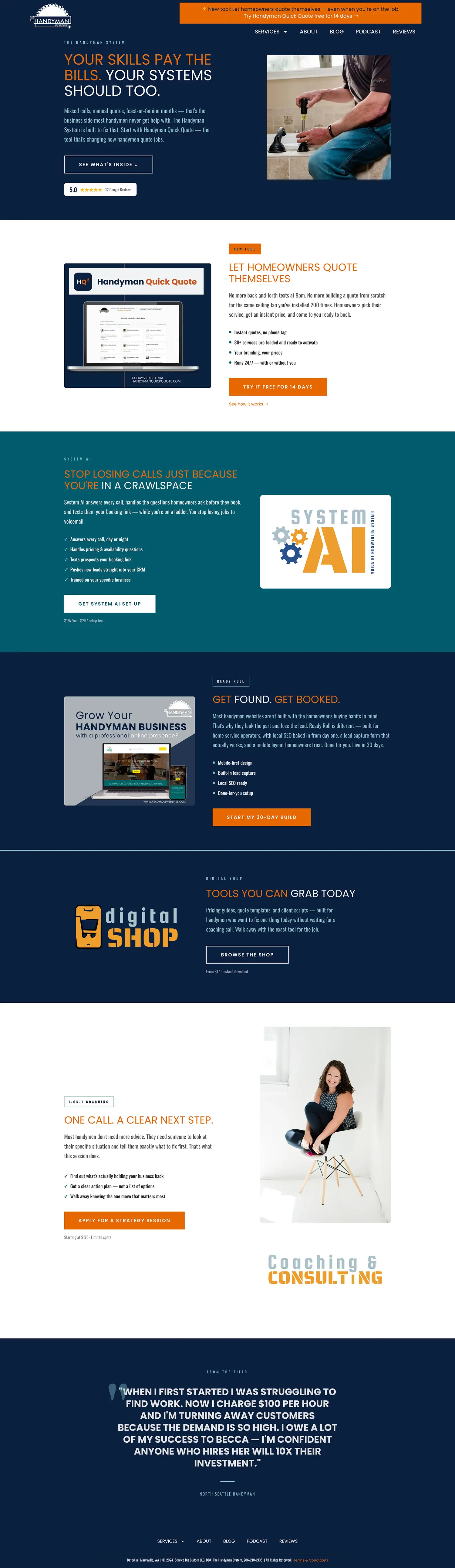
The Handyman System
B2B SaaS + coaching for handymen. Voice, visual system, site, GTM, product marketing.
View site →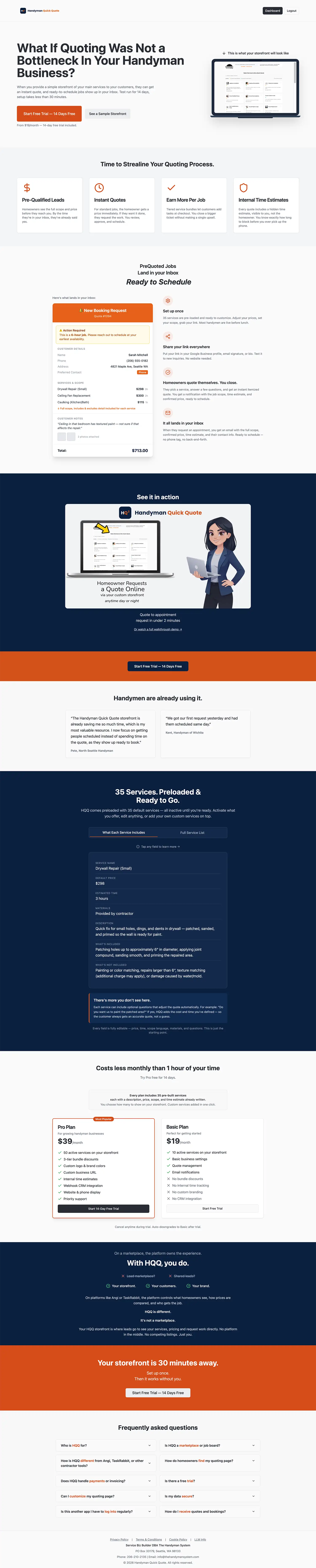
Handyman Quick Quote
SaaS quoting storefront for handymen. Distinct brand voice, visual identity, and audience.
View site →Client brands
Ten brand builds shipped for service-vertical operators.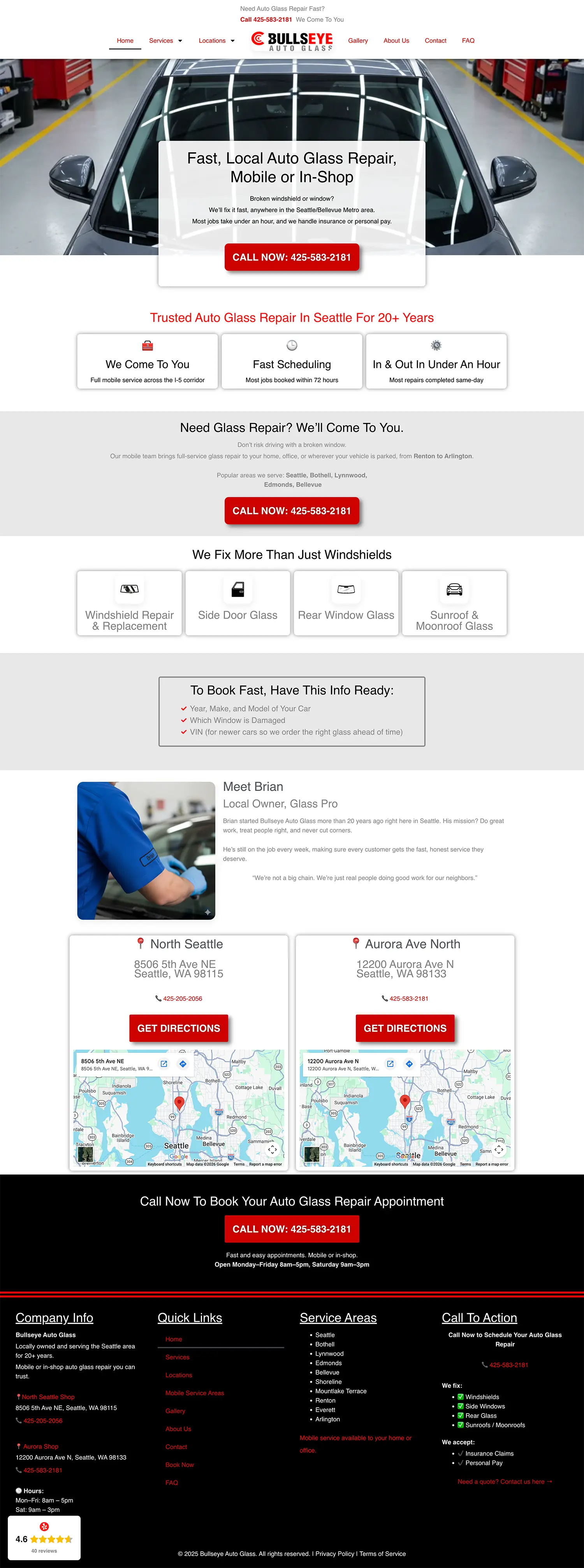
Bullseye Autoglass
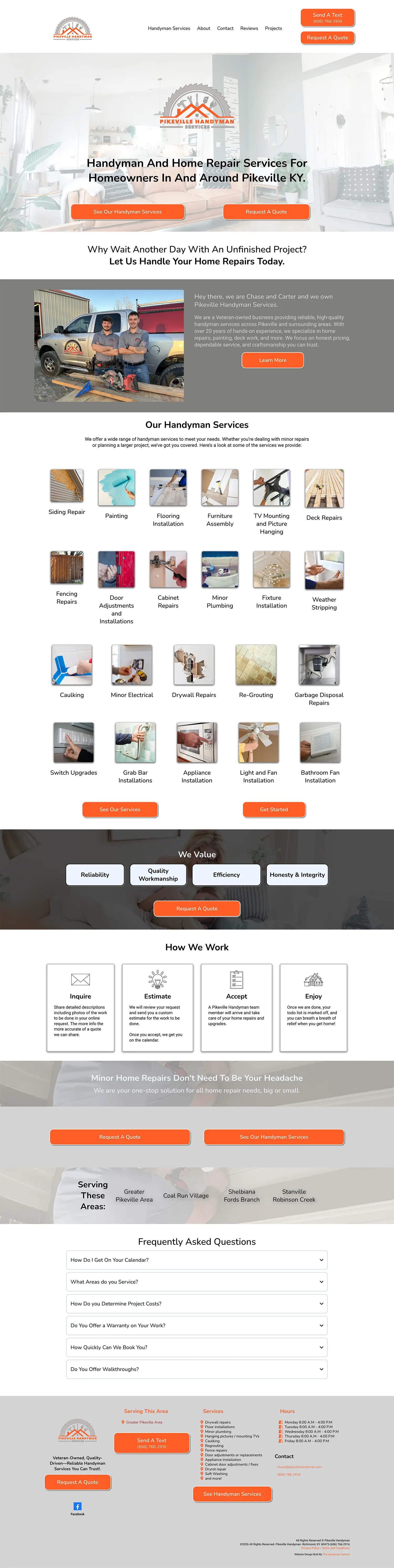
Auto glass. Website, SEO optimization, Google Ads management.
View site →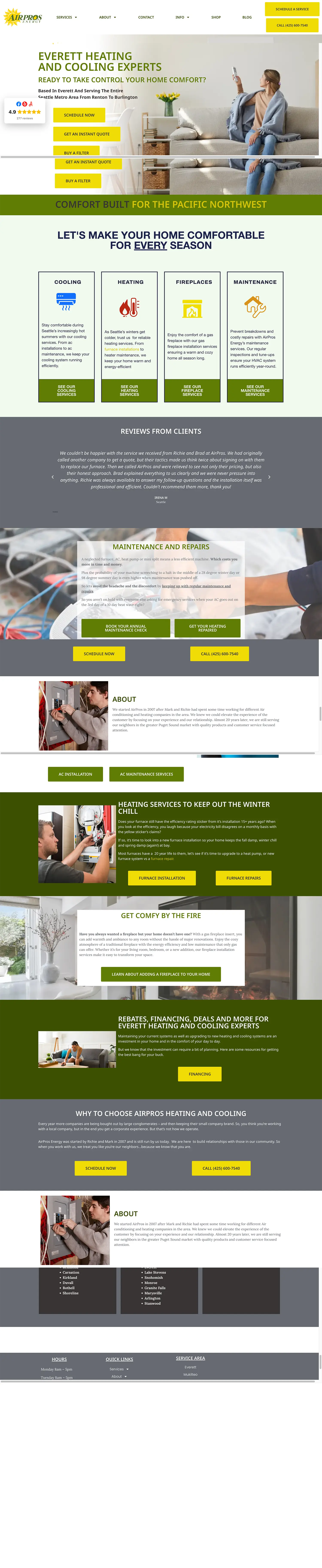
Airpros Energy
HVAC / energy services. Voice, website, CRM, email, SEO.
View site →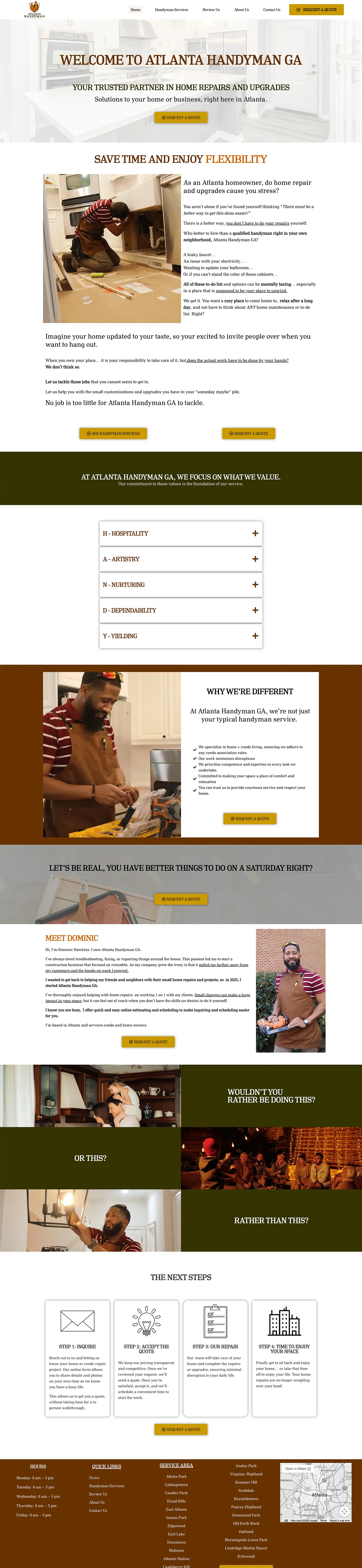
Atlanta Handyman
Handyman. Initial website, brand voice, messaging, visuals, hosting, initial system.
View site →
Top Shelf Handyman Pros
Handyman. Website, brand voice, messaging, visuals, hosting, system setup.
View site →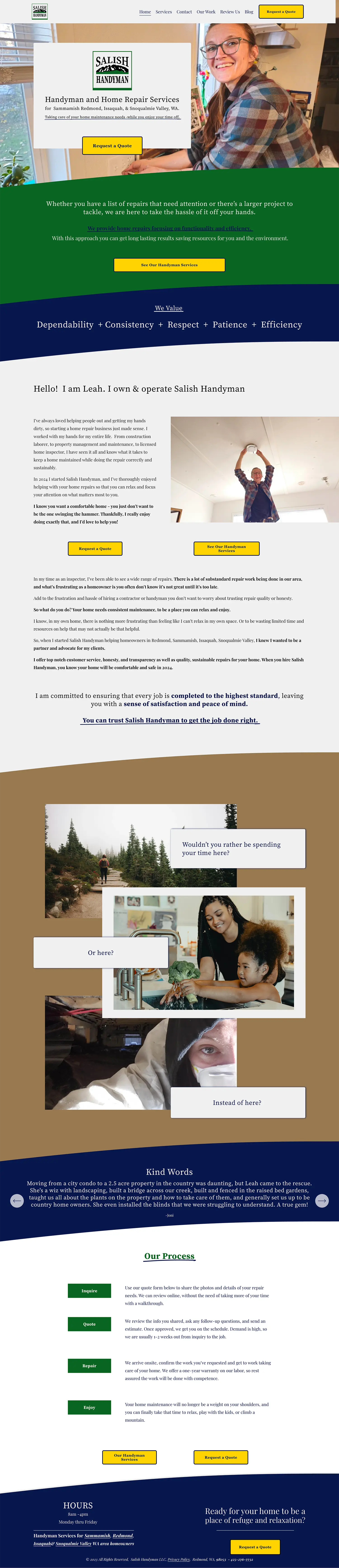
Salish Handyman
Handyman. Website, messaging, logo, brand, system.
View site →
Fortified Concrete Coatings
Concrete coatings. Brand, website, systems, logo.

North Seattle Remodel
Remodel contractor. Website, brand, voice, CRM system setup.
View site →
Handyman of Wichita
Handyman. Website, brand, voice, messaging.
View site →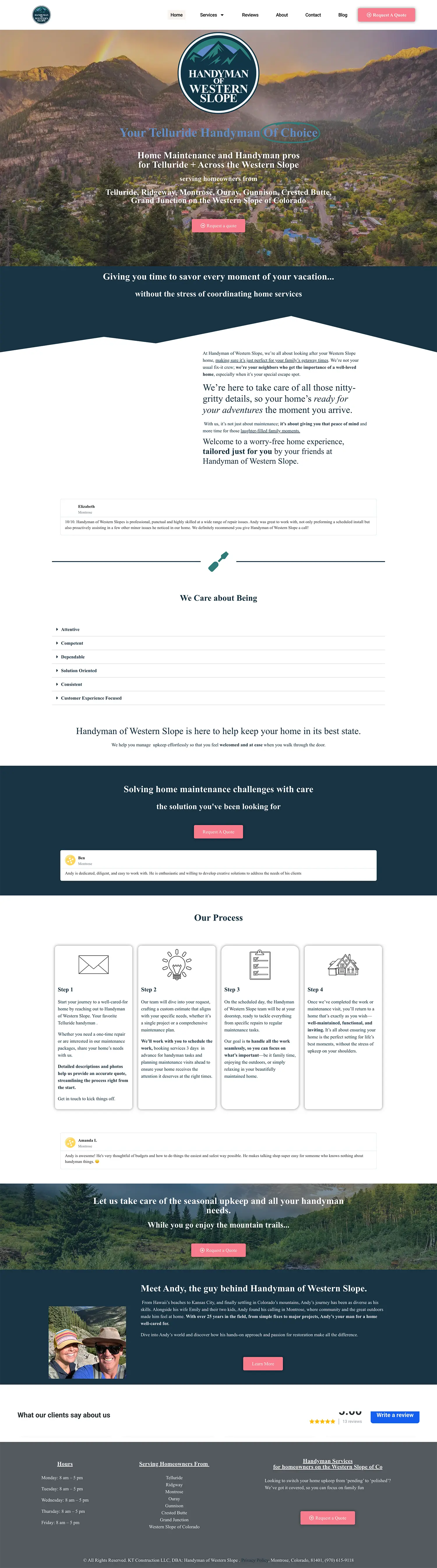
Handyman of Western Slope
Handyman. Website, brand voice, messaging.
View site →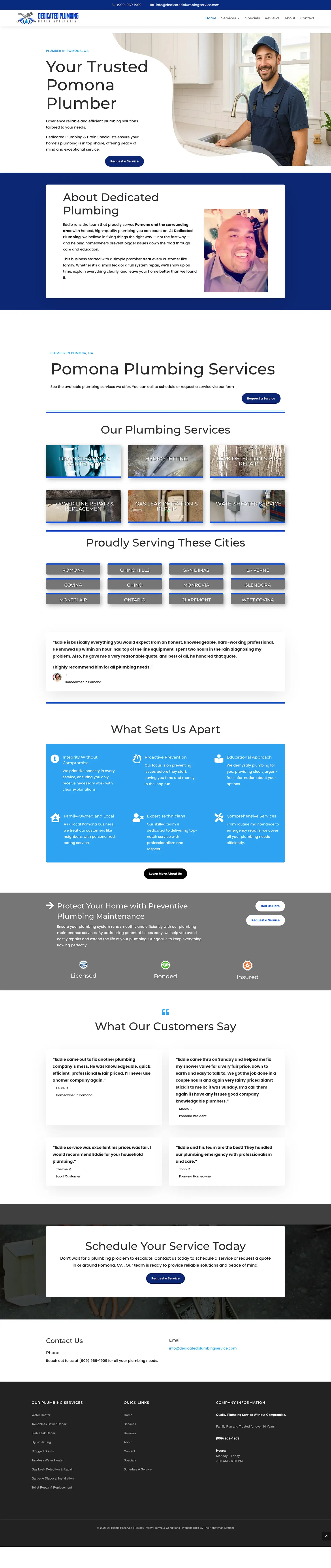
Dedicated Plumbing Services
Plumbing. Website refresh, initial SEO optimization.
View site →